Home / Blog
Blog
Hardware advice for real work: what matters, which parts, and what the public data says.
What fits in 32 GB of VRAM: the RTX 5090 and RTX PRO 4500 model list
A practical list of the models that run fully in a 32 GB card, with estimated speeds on the GeForce RTX 5090 and the RTX PRO 4500 Blackwell, what does not fit, and how to choose between two cards with the same memory.
Read the articleWhat a 128 GB AI box can run: ASUS Ascent GX10 and Ryzen AI Max+ 395, model by model
A model-by-model list for the two 128 GB desktop AI platforms: the NVIDIA GB10 box (ASUS Ascent GX10) and a Ryzen AI Max+ 395 mini PC. What fits, what is quick, what is too slow, and who it suits.
Read the articleWhat does "50 TOPS" mean for local AI?
The "50 TOPS" on AI PC spec sheets rates the NPU, a small low-power engine. It does not set how fast a big chat model writes. Memory bandwidth does.
Read the articleBeyond chat: VRAM for OCR, Whisper, image and video models
Offices run more than a chat assistant: invoice OCR, meeting minutes, document search, banners, short videos, camera QC. This is the VRAM each job needs, and the one rule that decides how to size a machine for them.
Read the articleUnified memory vs VRAM: what a 128 GB AI box really gives you
A 128 GB AI box holds models that no graphics card can, but it reads its memory several times slower. Here is what that trade means for the models you want to run.
Read the articleSizing local AI for a team of 5, 15 or 50
A three-step way to size a local AI machine for a team: pick the model class, count the people who use it at the same time, and check memory for their conversations. Worked examples for 5, 15 and 50 people.
Read the articleRTX Spark vs DGX Spark: same chip family, different job
NVIDIA's RTX Spark (Windows on Arm laptops and compact desktops) and the DGX Spark box share a chip family and a memory design. They suit different people. Here is what NVIDIA publishes, what it does not, and how to choose.
Read the articleRAG, fine-tuning or a better prompt: what your company AI actually needs
There are three ways to teach an open model about your company: a better prompt, RAG, or fine-tuning. Here is what each one does, when to use it, and how much GPU memory fine-tuning needs.
Read the articleA NAS that answers questions: the QNAP QAI-h1290FX explained
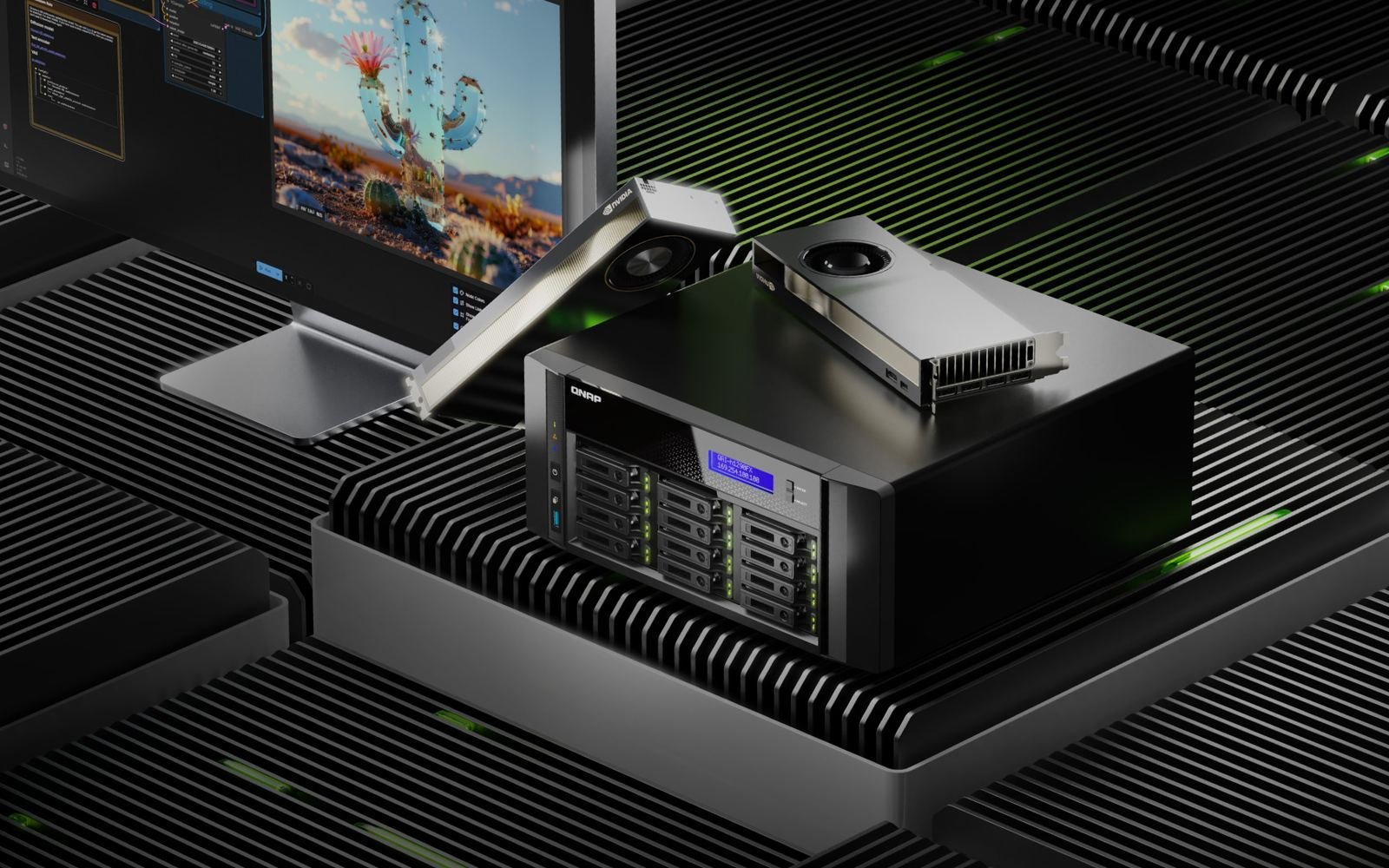
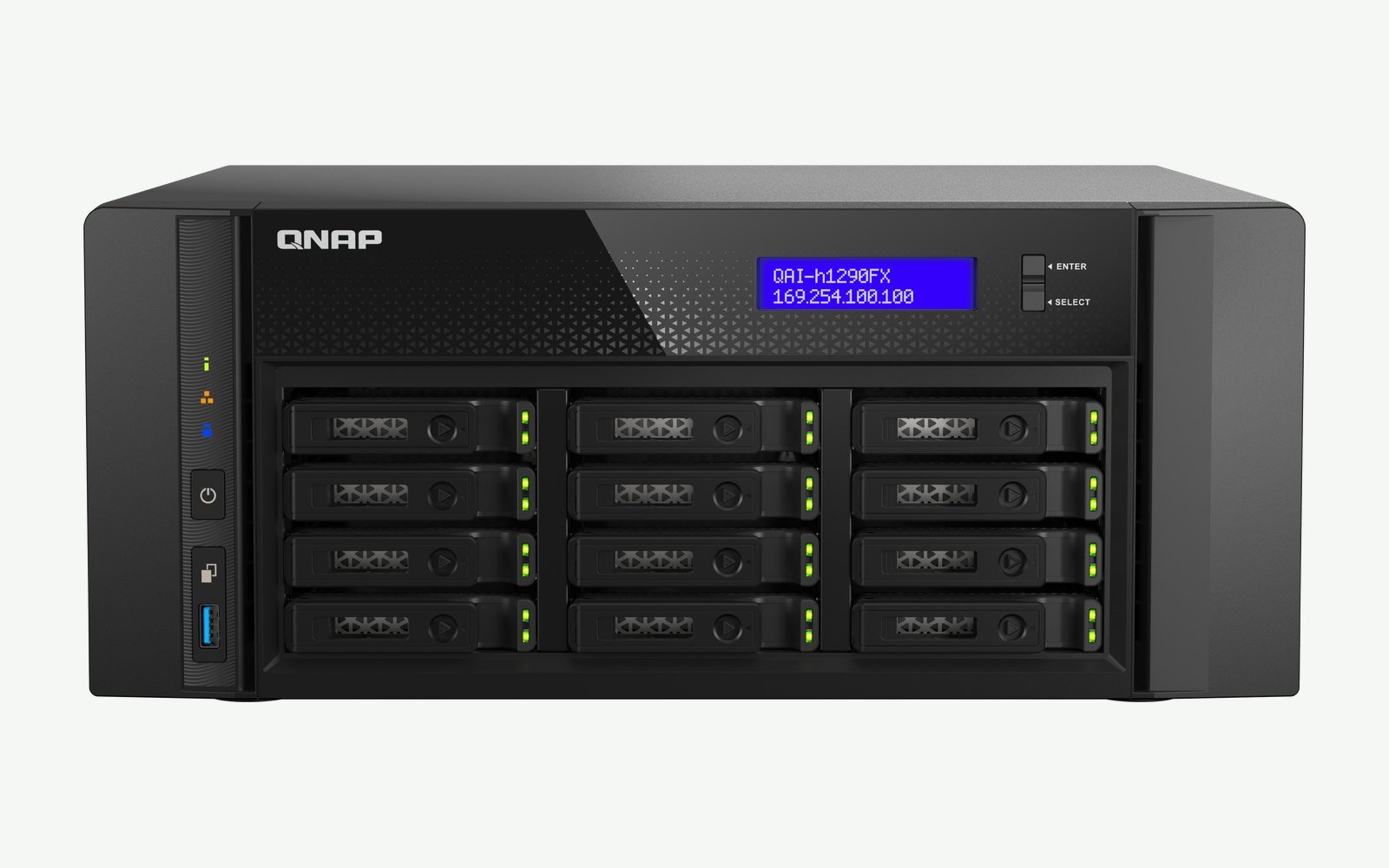
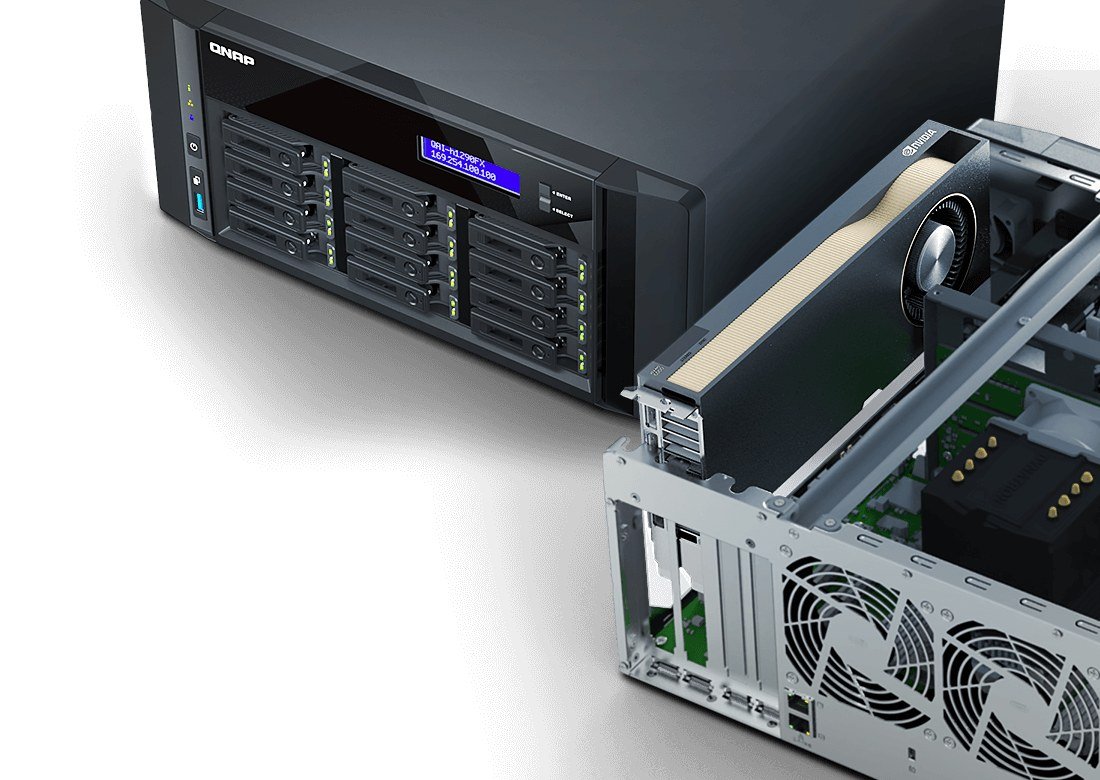
The QNAP QAI-h1290FX is a 12-bay all-flash NAS with a professional NVIDIA card inside. Here is how it turns a file server into an assistant that answers questions from your own documents, what staff do with it, and why only two cards fit.
Read the articleQAI-h1290FX: RTX PRO 4500 (32 GB) or RTX PRO 6000 Max-Q (96 GB)?
The QNAP QAI-h1290FX takes one of two NVIDIA cards. Pick by team size and by the class of model you want to run: what 32 GB does well, what 96 GB adds, and what neither will do.
Read the articlePrompt processing: the hidden spec for RAG and agents
A local model has two speeds: reading your prompt and writing the answer. Chat feels the second. RAG over long documents and agents feel the first, and graphics cards lead there by a wide margin.
Read the articleOne, two or four RTX PRO 6000s: what 96, 192 and 384 GB of VRAM unlock
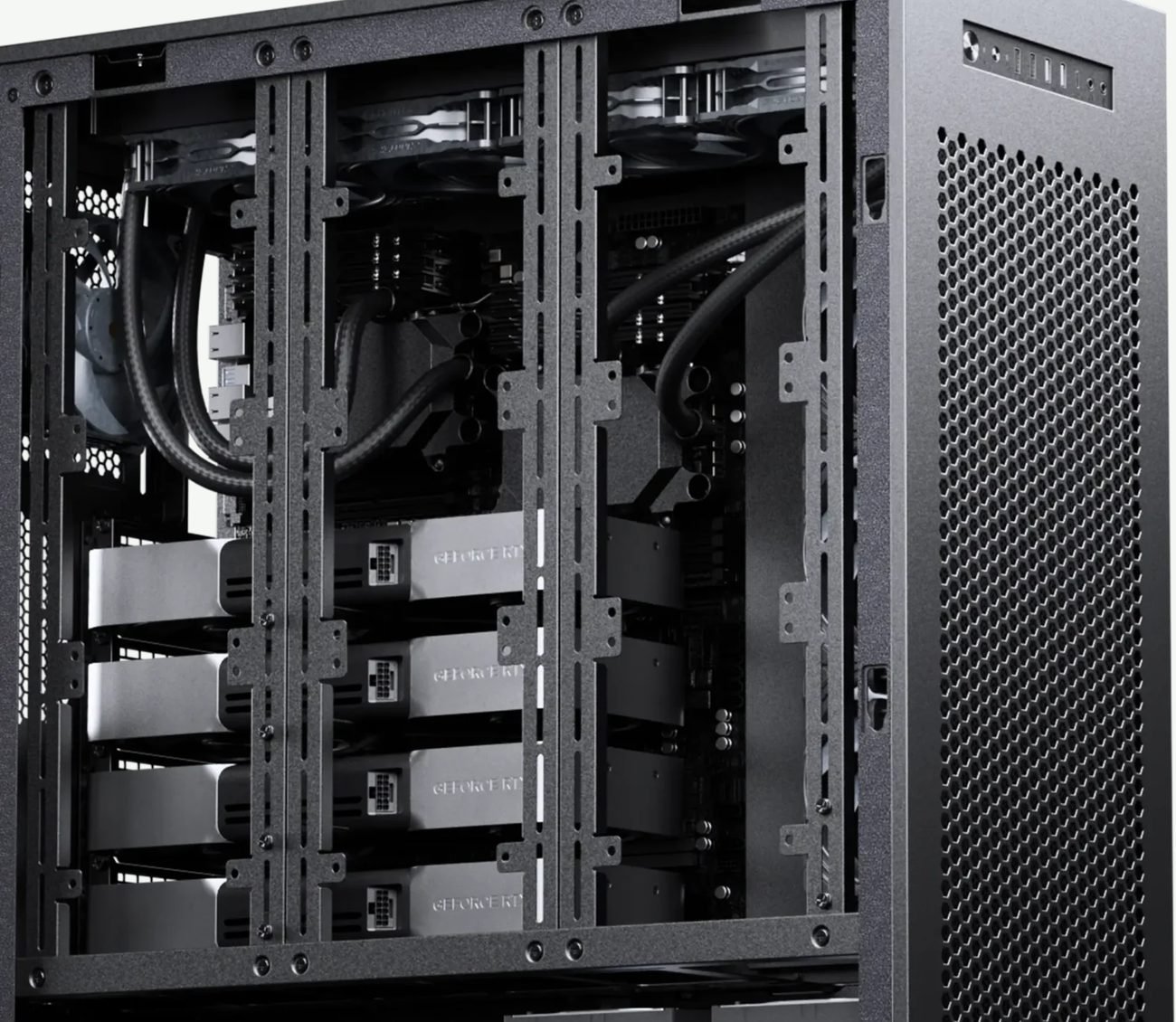
Each extra RTX PRO 6000 Max-Q adds 96 GB of VRAM. Here is what each step lets you run, how many people it serves, and where more cards stop helping.
Read the articleDGX Spark, Ryzen AI Max+ box, Mac Studio or RTX tower: pick by the job
Four kinds of machine can run a local LLM today. They are good at different jobs. Here is a table that starts from the job you have and tells you which machine fits, and what to watch out for.
Read the articleCloud AI or your own box? An honest checklist for Indonesian offices
Cloud AI is stronger on hard problems and often cheaper per answer. A box in your own office wins for other reasons. Here is a checklist to find out which one your office needs, or whether it needs both.
Read the articleFits in memory, still slow: why bandwidth sets your tok/s
A model that fits in memory can still crawl. Writing speed is memory bandwidth divided by the weights the model reads for each word, which is why mixture-of-experts models suit AI boxes and dense models want a GPU.
Read the articleOne dev or the whole office? Where an AI box stops and a GPU tower starts
A 128 GB AI box holds big models, but every extra user shares the same slow memory bus. Here is where one to five people is a good fit, and where a GPU server takes over.
Read the article16 GB is not an LLM card: the real VRAM floor for an office assistant
A 16 GB graphics card looks fast on paper, but the models an office actually wants do not fit in it. Here is what happens, in numbers, and what 16 GB cards are still good for.
Read the articleHow much GPU memory do local LLMs need?
A language model runs fast only when it fits in graphics card memory. Here is how to work out how much you need, and which EMD Lab machine covers it.
Read the article